
How to Safely Use Ice Packs and Scrotal Elevation Together

Updated: Feb 3
After a vasectomy, hydrocelectomy, hernia repair, or scrotal injury, it’s very common to be told two things: “use ice” and “keep the scrotum elevated.” Both are standard parts of many post-operative instruction sheets, but they’re not always explained in a practical way. Many people are left wondering:
Can I put an ice pack directly on my testicles?
How long should I keep icing after surgery?
Is it safe to elevate and ice at the same time?
This guide walks through why ice and elevation are used, basic safety rules for icing the scrotum, practical positions for combining ice and elevation, common mistakes to avoid, and when to stop and call your doctor. It also explains how stable support tools, including Tcup™, can make elevation and icing easier to manage day to day.
This article is general education only. Always follow the specific instructions your own surgeon or clinician gives you, especially if they differ from anything described here.
Why Ice and Elevation Are Recommended After Scrotal Surgery or Injury
The scrotum is a dependent (low-hanging) part of the body where fluid naturally tends to collect. Surgery or trauma in this area disturbs tissues and small blood and lymph vessels, which can lead to swelling, bruising, and discomfort as part of normal healing.
What surgery or injury does
Procedures such as vasectomy, hydrocelectomy, varicocele repair, or hernia repair involve cutting, dissecting, or repairing tissues in or near the scrotum and groin. This causes local inflammation, increased blood flow, and some leakage of blood and tissue fluid into the surrounding tissues; similar to a bruise.
How ice helps
Cold narrows small blood vessels in the skin and superficial tissues, which can help limit further fluid leakage into the area and may reduce pain by numbing nerve endings.
How elevation helps
Elevation uses gravity so that fluid can drain away from the lowest point of the scrotum back toward the body. This can reduce pressure, heaviness, and visible swelling.
Ice and elevation are supportive measures. They work best as part of a broader plan that includes rest, activity restrictions, any prescribed medications, and follow-up with your clinician.
General Safety Rules for Using Ice Packs on the Scrotum
Safe technique is essential. Ice used incorrectly can irritate or even damage skin.
1. Always use a barrier
Wrap the ice pack, gel pack, or bag of frozen peas in a thin cloth or towel.
Never place ice directly on the scrotal skin.
Many urology post-op instructions emphasize using ice with a cloth barrier and not directly against the skin to avoid injury.
2. Keep sessions short, with breaks
Exact timing should follow your surgeon’s advice. Typical general principles from post-operative instructions include:
Use ice intermittently - short sessions with at least equal or longer breaks in between (for example, “about 15 minutes on, 15 minutes off” is a common pattern in some urology instructions, but your clinician may give a different schedule).
Limit total icing time each day to what your clinician recommends.
If you were told “no more ice after day X” or “ice only for the first 24–48 hours,” follow that guidance.
3. Place the pack carefully
Position the wrapped ice over the scrotum or groin area your surgeon indicated, without pressing hard directly on incisions or very tender spots.
The goal is gentle contact, not compression.
4. Monitor how the skin feels
Stop icing and remove the pack if:
The skin feels numb, burning, or painful from the cold itself.
The area looks very pale or blotchy in a way that concerns you.
5. Use ice at the right time in recovery
Ice is most commonly recommended in the early post-op period (often the first couple of days) and for short flare-ups of swelling or pain later, if your clinician says it’s still appropriate.
If you are weeks out from surgery and unsure whether to continue icing, ask your doctor directly.
Best Positions for Using Ice and Scrotal Elevation at the Same Time
Many people find it easiest to combine ice and elevation while reclining. The key is to support and gently lift the scrotum without crushing it, while keeping the ice pack stable.
Reclining positions (bed or recliner)
Body position
Lie on your back with your upper body slightly raised if comfortable.
Slightly bend your knees and support them on a pillow or rolled blanket.
Aim to keep the scrotum at or just above the level of the hips.
Supporting and elevating the scrotum
Use a small cushion or folded towel under the scrotum so it rests in a “well” rather than hanging freely.
Ensure the support lifts without pressing directly on incisions.
Adding the ice pack
Place the cloth-wrapped ice pack gently over the supported scrotum or the side your surgeon indicated.
Let the ice rest on the support and scrotum rather than trapping it under your body weight.
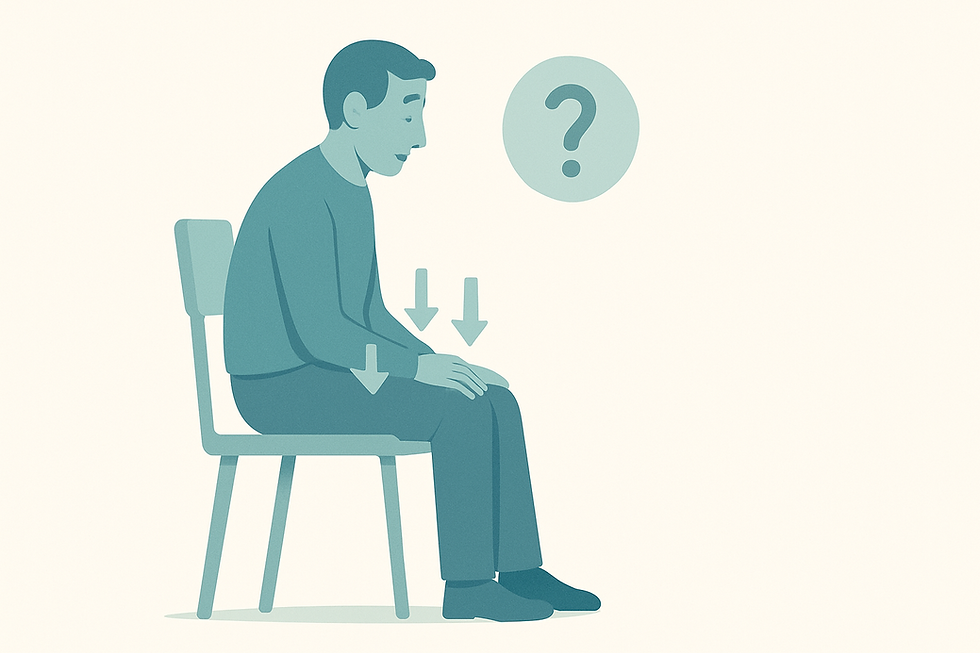
Sitting positions (sofa, firm chair)
Body position
Sit on a firm surface with both feet flat on the floor.
Avoid deep couches that make you sink and sharply bend at the hips.
Keep your pelvis relatively neutral—not heavily slouched.
Creating an elevation “well”
Place a cushion under your thighs or slightly behind your knees so the scrotum can rest in front on a small, supportive pad.
The scrotum should be lifted, not dangling off the edge of the chair.
Ice pack placement
Rest the wrapped ice pack gently against the scrotum or groin as advised, supported by the cushion so it doesn’t slide or dig in.
When your setup is stable, you should be able to stay in position for the full iced interval without constantly readjusting.
A stable, shaped support like Tcup™ can make it easier to maintain both elevation and a consistent spot for a cloth-wrapped ice pack, instead of chasing shifting stacks of pillows or towels as they compress and roll away.
Common Mistakes When Using Ice Packs and Elevation
Knowing what to avoid is as important as knowing what to do.
Placing ice directly on the skin
Direct contact risks frostbite-like injury and skin damage, especially in a sensitive area.
Leaving ice on for too long
Very long or continuous icing sessions can overcool tissues and cause skin problems.
Prolonged numbness from cold is a warning sign to stop and let the area warm up.
Using awkward, unstable positions
Twisting your hips or torso to “hold” the ice in place often increases discomfort.
Perching on unstable pillow towers can make you tense your muscles, which may worsen pain.
Over-compressing the scrotum
Sitting or lying so that the scrotum is crushed between your body and a hard surface, or strapping on an ice pack too tightly, can increase pain and may interfere with blood flow.
Continuing home care when things are clearly getting worse
If swelling or pain is escalating, relying on more ice and elevation instead of contacting a clinician can delay needed treatment.
Tools that are designed specifically for scrotal support (including Tcup) are meant to reduce some of the positioning and stability problems that show up with improvised setups, but they still must be used within a clinician-guided plan.
How a Stable Support Like Tcup Fits Into Safe Icing and Elevation
An ideal support for combining ice and elevation should be:
Stable – it does not collapse or roll away halfway through an icing session.
Shaped – it allows the scrotum to rest in a gentle cradle or “well,” lifted rather than flattened.
Repeatable – you can set it up the same way each time without building a new pillow structure.
Tcup™ is a specialized scrotal support cushion designed to gently elevate and cradle the scrotum while you sit or recline. In the context of icing and elevation:
It provides a consistent surface under the scrotum so you are not relying on loosely folded towels that compress unpredictably.
A cloth-wrapped ice pack can be placed or rested against the scrotum over the support, instead of being balanced on shifting pillows.
This can make it easier to follow common instructions to “use ice and elevate” without constantly rebuilding your position.
Just as important are the boundaries:
Tcup does not diagnose, treat, or cure injuries, infections, or post-operative complications.
It is not a substitute for evaluation, diagnosis, or treatment by a healthcare professional.
It is a comfort and positioning aid meant to support the rest, support, and elevation recommendations you and your clinician have already discussed.
When to Stop Icing or Call Your Doctor
Ice and elevation are not meant to hide serious problems. Use them, but also watch for warning signs.
Reasons to pause or stop icing and contact your clinician
The skin under the ice looks very pale, blotchy, or feels numb from cold exposure.
You feel burning or pain from the cold itself.
Swelling or pain does not improve at all despite repeated icing and elevation as instructed.
Non-urgent but important reasons to call your doctor or surgeon
Swelling is not trending down over the timeframe your surgeon described.
Pain is gradually worsening or is interfering with walking, sleep, or daily tasks.
You notice new lumps, firmness, or changes in scrotal shape you do not understand.
Urgent or emergency signs (seek same-day care or ER)
Sudden, severe scrotal or testicular pain.
Rapidly increasing or very tense swelling of the scrotum.
Marked redness, warmth, or spreading discoloration of the scrotal or groin skin.
Fever, chills, or feeling very unwell.
If you are ever unsure whether it is still appropriate to continue icing or elevating, call your surgeon’s office or an on-call service and describe your symptoms.
Summary / Key Takeaways
Ice and scrotal elevation are common, supportive tools used after vasectomy, hydrocelectomy, hernia repair, and scrotal injuries to help reduce swelling and discomfort.
Use ice safely: always wrap packs in a cloth, keep sessions short with breaks, and never apply ice directly to the scrotal skin.
Elevation should gently lift and support the scrotum rather than compressing or twisting it; stable, repeatable positions are easier on healing tissues.
Avoid common mistakes such as direct ice contact, very long icing sessions, unstable or contorted positions, over-compression, and trying to “push through” clearly worsening symptoms.
Tools like Tcup™ can make combined ice-and-elevation positioning more stable and comfortable as part of your clinician-approved recovery plan, but they do not replace medical evaluation or treatment.
Disclaimer: This article is for general educational purposes only and is not a substitute for personalized medical advice, diagnosis, or treatment. Always follow the instructions from your own clinician and seek medical care if you are worried about your symptoms.
If you are looking for a simple way to keep the scrotum comfortably elevated during recovery, you can explore whether Tcup™ fits alongside your clinician’s other recommendations.


Comments